
Healing After Mole Removal: What Is Normal?
Does the treated area become darker, form a scab or look red after treatment? Many of these changes are part of the typical healing process. This guide explains what happens during each phase, how to properly care for the skin, and what to look out for.
If you are unfamiliar with the normal healing process, it is easy to become concerned. However, regeneration after a localized treatment often follows a clearly recognizable pattern.
The most important thing is to give the treated area enough time and not remove the scab prematurely.
The Typical Healing Process
Whether a wart, mole, or skin tag has been treated: The visible changes often follow similar phases. If you would like to understand how the treatment works in more detail, you can find our detailed guide on how it works here .
Initial Reaction
Immediately after application, the area may look red or feel sensitive. It may also feel warm, sting, or tingle. During the first few hours, the treated area will begin to change visibly.
Scab Formation
The treated area may turn dark brown to black and form a firm scab. Mild itching or a feeling of tightness may occur during this phase.
Detachment Phase
As regeneration progresses, the scab often begins to loosen around the edges. It should fall off completely on its own. The new skin underneath may initially look pink or lighter.
Regeneration
The new skin continues to mature and gradually blends in with the surrounding skin. Slight color differences may remain visible for a while. The duration and progression vary depending on skin type and body area.
Normal or Concerning? How to Assess Symptoms
Some changes are part of the normal process. Others may indicate that the skin is reacting more strongly than expected.
| Symptom | Typical Progression | Concerning |
|---|---|---|
| Redness | Mild around the area, especially during the first few days | Spreads or becomes more severe |
| Swelling | Mild during the first few days | Increases significantly or feels noticeably hot |
| Itching | Mild during the scab phase | Severe or accompanied by a widespread rash |
| Scab | Dark brown to black and dry | Unpleasant odor or significant discharge |
| Pain | Mild pulling or stinging | Increases or becomes severely throbbing |
| New Skin | Pink, light, or temporarily discolored | Severely hardened or increasingly raised |
Proper Aftercare
Aftercare plays a major role in the final cosmetic result. The most important thing is to avoid irritating the skin as much as possible.
Cleanse Gently
Keep the treated area carefully clean and avoid unnecessary friction. Do not use highly alcoholic or harsh products during regeneration.
Leave the Skin Alone
Do not scratch, pull off, or mechanically work the scab. It forms a natural protective layer for the skin underneath.
Protect from Intense Sunlight
Newly regenerated skin is more sensitive to UV radiation. The area should be consistently protected, especially after the scab falls off.
Care After the Scab Phase
Once the scab has completely fallen off and the skin has closed, gentle skincare may be beneficial. Products with vitamin E or similar skin-caring formulations can be used for this purpose.
5 Common Mistakes After Application
Pulling Off the Scab
This is one of the most common mistakes. The scab should fall off completely on its own.
Intense Sunlight Too Soon
New skin may be more sensitive to UV radiation and may temporarily become more discolored.
Using Too Many Products at Once
More skincare does not automatically mean better skincare. A simple, skin-friendly routine is usually more beneficial.
Bathing or Using a Sauna Too Soon
Prolonged moisture, intense heat, and friction can soften the scab or further irritate the sensitive area.
Overinterpreting Normal Changes
A dark scab, mild redness, or itching may be part of the typical healing process. The most important thing is how it develops over several days.
How Does Healing Differ Depending on the Method?
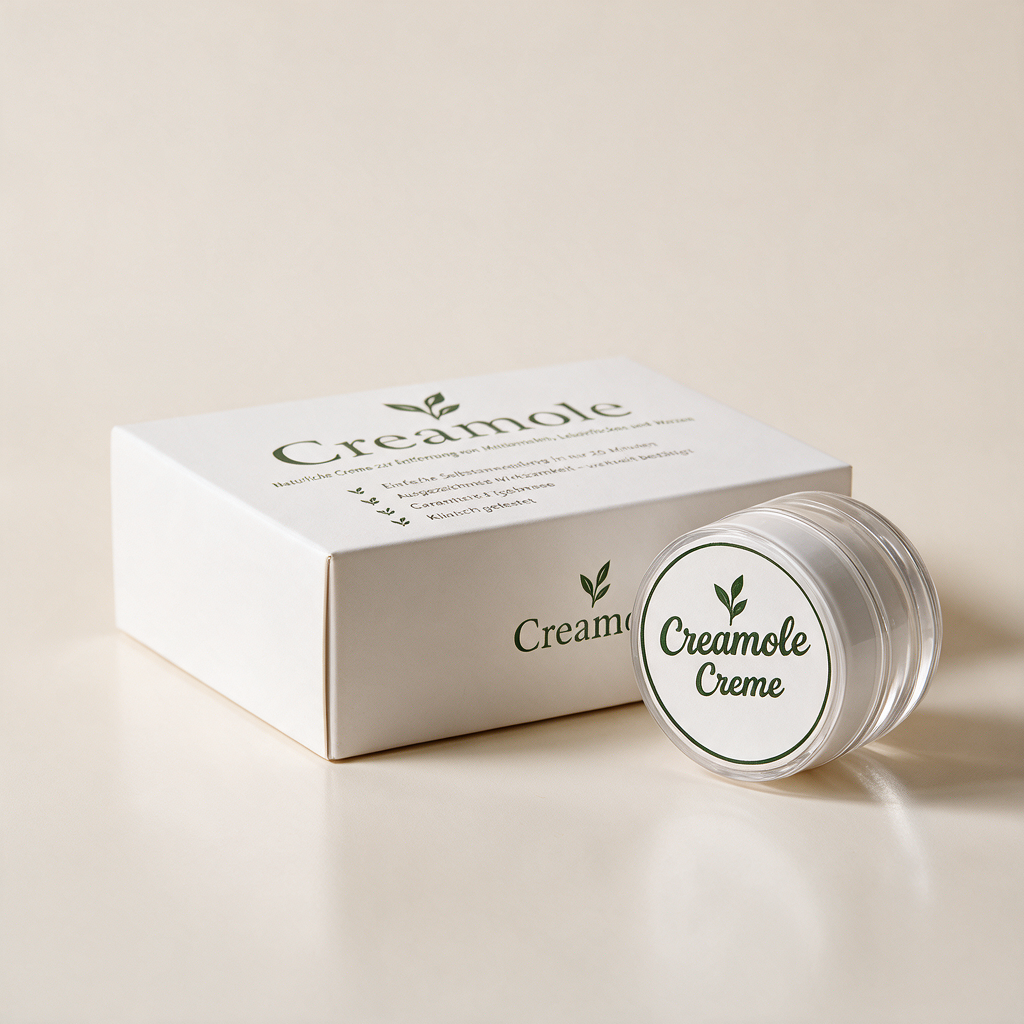
Creamole
After localized application, the treated area changes, dries out, and typically forms a scab. The regeneration phase then begins.
Compare mole creams →Surgical Removal
After surgical removal, healing occurs across the resulting wound area. Depending on the procedure, stitches and longer follow-up care may be necessary.
Laser Treatment
A scab may also form after laser treatment. Redness and sensitivity may vary in severity depending on the depth of the treatment.
The Most Important Things for Healing
- Scab formation within the first few days is often part of the normal process.
- Mild redness, itching, or a feeling of tightness may occur during regeneration.
- The scab should not be scratched or removed prematurely.
- Avoid intense sunlight on newly regenerated skin.
- Patience is an essential part of the entire process.
Frequently Asked Questions About Healing
Yes. A dark, dry scab may form within the first few days
and is part of the typical healing process. It should fall off on its own.
The scab may fall off within one to two weeks.
However, the skin underneath may need several more weeks
before its color and texture have fully blended in.
Mild redness around the treated area may occur, especially during the
first few days, and should normally gradually subside.
Manipulate the area as little as possible, avoid intense sunlight, and
use gentle skincare after the scab falls off.
Short showers are generally fine. During this time, the treated area should
be subjected to as little mechanical stress as possible and not be left to soak for long.
The progression depends on several factors, including the size, structure, and depth of the
original skin lesion. Individual skin factors also play
a role.
Is a scab normal after treatment?
How long does complete regeneration take?
Is mild redness normal?
How can I support the skin after application?
Can I shower after application?
Can the treated area become visible again?
Targeted application at home.
Creamole was developed for the targeted application on selected benign skin lesions and enables a clear, straightforward treatment process at home.